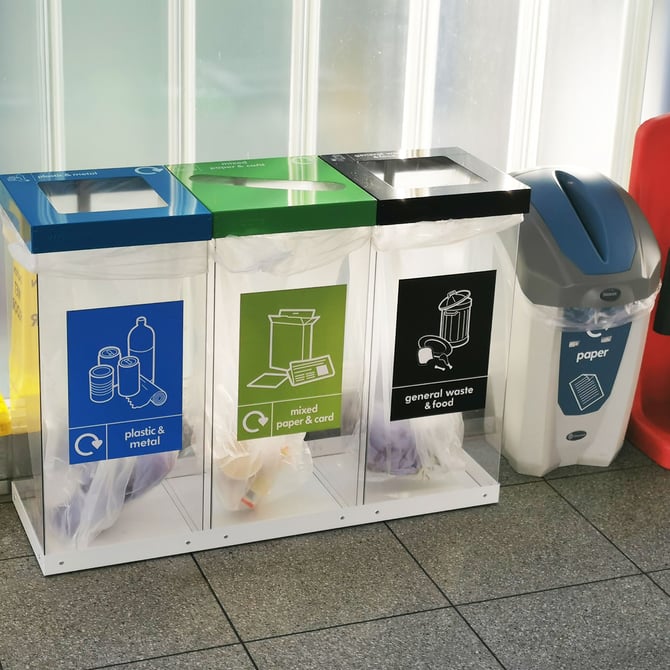
Improving waste infrastructure helps ensure that tenants can sort waste correctly and efficiently. By analysing your waste data together with observations from the building, you can identify where changes are needed.
Start by looking for patterns in your data and daily operations.
Common signs of infrastructure issues include:
- High levels of general waste
- Frequent contamination in recycling streams
- Overflowing bins in certain areas
- Some waste streams being rarely used
- Large differences in performance between buildings or areas
These patterns can help you identify where the setup is not working as intended.
Here are some practical ways to improve waste infrastructure:
- Adjust bin placement
Place sorting stations closer to where waste is generated, such as kitchens and shared areas - Review bin capacity and collection frequency
Overflowing bins may indicate that capacity is too low or collection is too infrequent - Reduce general waste bins in office settings
Review the amount of general waste bins in office settings (e.g. at each desk), to motivate people to use sorting stations - Improve signage and consistency
Clear and consistent labels across the building make it easier for tenants to sort correctly - Align setup across buildings
A consistent structure makes it easier to scale improvements and compare performance
It is also useful to link what you see in the data to what is happening in practice. For example:
- High general waste may indicate poor accessibility to sorting stations
- Contamination may be caused by unclear signage or confusing setup
- Low use of certain waste streams may mean they are difficult to access or understand
A good approach is to focus on one area at a time, test improvements, and follow the results in your data.